
Home / Medical Service / Medical Treatment / ASI – Active-Specific Immunotherapy

คำอธิบายและความเป็นมา (Description & Background)
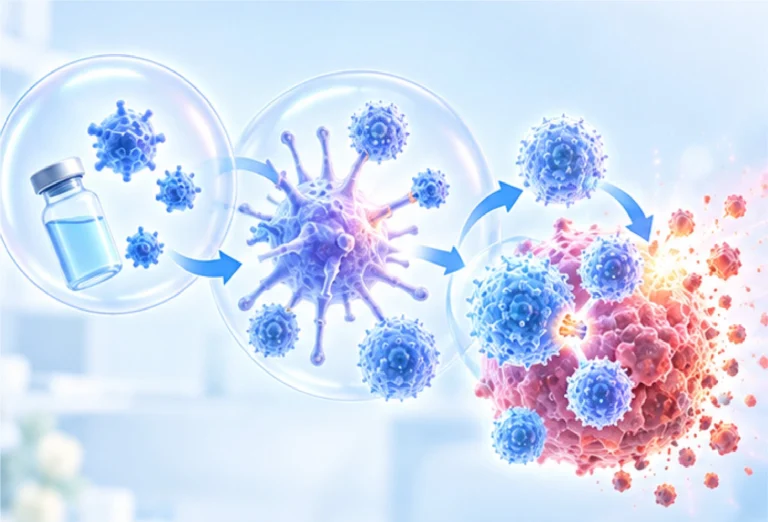
Active-Specific Immunotherapy (ASI) คือแนวทางการรักษาที่มุ่งเน้นการกระตุ้นหรือปรับเปลี่ยนการตอบสนองของระบบภูมิคุ้มกันของผู้ป่วยโดยตรง (Active Immune Response) ให้มีความจำเพาะเจาะจงต่อแอนติเจนเป้าหมาย (Antigen-Specific) แตกต่างจาก Passive Immunotherapy ที่เป็นการให้สารภูมิคุ้มกันสังเคราะห์หรือเซลล์ภูมิคุ้มกันจากภายนอกเข้าไปทำหน้าที่แทน
จุดกำเนิดของ ASI เริ่มต้นจากการพัฒนาวัคซีนป้องกันโรคติดเชื้อ ก่อนจะขยายสู่การรักษาโรคมะเร็ง (Coley’s toxins ในช่วงปลายศตวรรษที่ 19 สู่ Cancer Vaccines และ Autologous Tumor Cell Lysates ในปัจจุบัน) ตลอดจนการพัฒนา Allergen-Specific Immunotherapy (AIT) โดย Leonard Noon ในปี 1911
ในทางเวชศาสตร์บูรณาการและเวชศาสตร์ชะลอวัย (Functional & Anti-aging Medicine) ASI ถูกขยายขอบเขตมาสู่การเป็นเครื่องมือปรับสมดุลภูมิคุ้มกัน (Immune Modulation/Immunometabolic Reprogramming) เพื่อรักษาโรคภูมิแพ้และโรคภูมิคุ้มกันทำลายตนเอง (Autoimmune Diseases) ควบคู่กับการควบคุมสภาวะการอักเสบเรื้อรังระดับต่ำ (Inflammaging)
กลไกทางชีววิทยาและอื่นๆ (Biological Mechanisms & Others)
กลไกทางสรีรวิทยาและระดับโมเลกุลของ Active-Specific Immunotherapy จำแนกตามพยาธิสภาพของกลุ่มโรคเป้าหมายออกเป็น 2 ทิศทางหลัก:

ขั้นตอนการปฏิบัติ (Practical Steps)
ประโยชน์ (Benefits)
ผู้ที่อาจจะได้รับประโยชน์จากการรักษา (Indications)
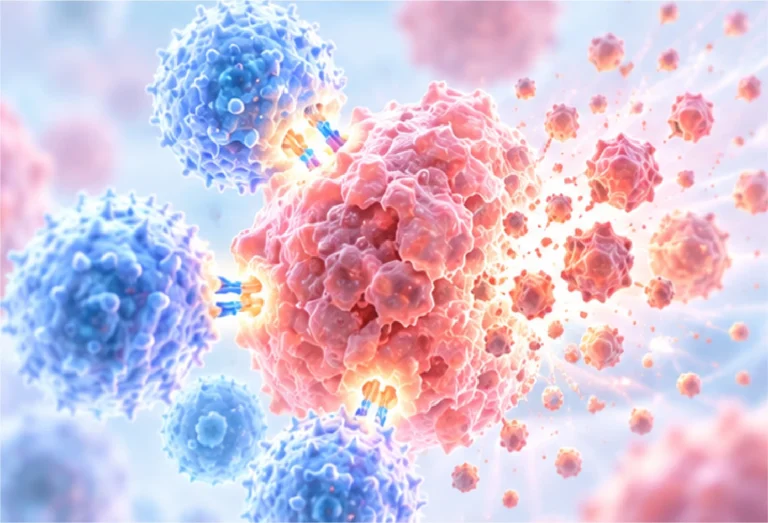
จากหลักฐานเบื้องต้น และกลไกทางพยาธิสรีรวิทยา โรคและสภาวะดังต่อไปนี้ อาจจะได้รับประโยชน์:

ข้อห้าม (Contraindications)
ข้อควรระวัง (Precautions)

บทสรุป (Conclusion)
Active-Specific Immunotherapy (ASI) ถือเป็นนวัตกรรมสำคัญที่เชื่อมโยงวิทยาภูมิคุ้มกันระดับโมเลกุลเข้ากับหลักการส่งเสริมสุขภาพแบบองค์รวม โดยมุ่งเน้นการปรับโครงข่ายภูมิคุ้มกันที่ต้นเหตุ
ในโรคภูมิแพ้ (AIT) มีหลักฐานเชิงประจักษ์รองรับอย่างชัดเจน ส่วนในโรคมะเร็ง (Neoantigen/DC Vaccines) และโรคภูมิคุ้มกันทำลายตนเอง (Tolerogenic Vaccines) มีการศึกษาวิจัยทางคลินิกอย่างต่อเนื่อง ประสบการณ์ในการรักษามะเร็งแบบบูรณาการ บ่งชี้ค่อนข้างชัดเจนว่า โรคมะเร็งเป็นโรคที่มีกลไกหลบหนีระบบภูมิคุ้มกัน ส่งผลให้การรักษาทุกชนิดได้ผลไม่เต็มที่ และการใช้ ASI ร่วมการรักษาทำให้เอาชนะข้อจำกัดนั้นได้ และทำให้ตอบสนองต่อการรักษาที่กำลังดำเนินอยู่
National Institutes of Health (NIH) | (.gov)
Vermorken, J. B., Claessen, A. M., van Tinteren, H., Gall, H. E., Ezinga, R., Meijer, S., Scheper, R. J., Rankin, E. M., Schper, R. J., & Pinedo, H. M. (1999). Active specific immunotherapy for stage II and stage III human colon cancer: a randomised trial. The Lancet, 353(9150), 345–350.
National Institutes of Health (NIH) | (.gov)
Morton, D. L., Hsueh, E. C., Essner, R., Foshag, L. J., O’Day, S. J., Bilchik, A. J., Gupta, R. K., Hoon, D. S., Ravindranath, M. H., Nizze, J. A., Gammon, G., Wanek, L. A., & Wang, H. J. (2002). Prolonged survival of patients with resected stage III melanoma of the skin in a randomized phase III trial of active specific immunotherapy with a polyvalent melanoma vaccine. Annals of Surgery, 236(4), 438–449.
Hanna, M. G., Jr., Hoover, H. C., Jr., Vermorken, J. B., Harris, J. E., & Pinedo, H. M. (2001). Adjuvant active specific immunotherapy of stage II and stage III colon cancer with an autologous tumor cell vaccine: first planned interim analysis of the Eastern Cooperative Oncology Group (E5283) trial. Journal of Clinical Oncology, 19(6), 1645–1654.
National Institutes of Health (NIH) | (.gov)
Berd, D., Sato, T., Cohn, H., Maguire, H. C., Jr., & Mastrangelo, M. J. (2001). Treatment of metastatic melanoma with an autologous, hapten-modified melanoma vaccine: regression of distant metastases. International Journal of Cancer, 94(4), 531–539.
Harris, J. E., Ryan, L., Hoover, H. C., Jr., Stuart, R. K., Oken, M. M., Benson, A. B., 3rd, Mansour, E., Haller, D. G., Manola, J., & Hanna, M. G., Jr. (2000). Adjuvant active specific immunotherapy for stage II and III colon cancer with an autologous tumor cell vaccine: Eastern Cooperative Oncology Group Study E5283. Journal of Clinical Oncology, 18(1), 148–157.
Schirrmacher, V., Feuerer, M., Fournier, P., Ahlert, T., Umansky, V., & Beckhove, P. (2003). T-cell primed in bone marrow: active specific immunotherapy (ASI) in clinical and preclinical models of human cancer. Seminars in Oncology, 30(3 Suppl 8), 41–49.
Jocham, D., Richter, A., Hoffmann, L., Iwig, K., Fahlenkamp, D., Zakrzewski, G., Schmitt, E., Dannenberg, T., Lehmacher, W., von Wietersheim, J., & Doehn, C. (2004). Adjuvant autologous renal tumour cell vaccine and risk of tumour progression in patients with renal-cell carcinoma: a randomised controlled trial. The Lancet, 363(9409), 594–599.
Hoover, H. C., Jr., Brandhorst, J. S., Peters, L. C., Surdyke, M. G., Takeshita, Y., Madariaga, J., Muenz, L. R., & Hanna, M. G., Jr. (1993). Adjuvant active specific immunotherapy for human colorectal cancer: 6.5-year median follow-up of a phase III prospectively randomized trial. Journal of Clinical Oncology, 11(3), 390–399.
Nemunaitis, J. (2003). Active, specific immunotherapy for lung cancer: hurdles and strategies using genetic modification.Lung Cancer, 41(Suppl 1), S23–S30.
National Institutes of Health (NIH) | (.gov)
Wallack, M. K., Sivanandham, M., Balch, C. M., Urist, M. M., Robinson, W. A., Dallow, T., Bartolucci, A. A., & Bordelon, L. (1998). A phase III randomized systemic active specific immunotherapy study of melanoma patients using a vaccinia melanoma oncolysate. Cancer, 82(7), 1247–1255.
Sondak, V. K., Liu, P. Y., Tuthill, R. J., Kempf, R. A., Unger, J. M., Sosman, J. A., Thompson, J. A., Jacobs, I. A., Lee, C. P., & Flaherty, L. E. (2002). Adjuvant immunotherapy of resected, intermediate-thickness, node-negative melanoma with an allogeneic melanoma vaccine: overall results of a randomized trial of the Southwest Oncology Group. Journal of Clinical Oncology, 20(8), 2058–2066.
Mobus, V. J., Baum, R. P., Bolle, M., Kreienberg, R., & Biersack, H. J. (2003). Active specific immunotherapy in ovarian cancer: induction of humoral and cellular immune responses by vaccination with autologous tumor cells. International Journal of Gynecological Cancer, 13(4), 428–435.
O’Boyle, K. P., Zamore, R., Adkins, D., & Hanna, M. G., Jr. (2011). Active specific immunotherapy (OncoVAX) in patients with stage II colorectal cancer: extended long-term follow-up results. Journal of Clinical Oncology, 29(15_suppl), 3583.
National Institutes of Health (NIH) | (.gov)
Hanna, M. G., Jr. (2012). Active-specific immunotherapy of human cancers with the heat-killed bacillus Calmette-Guérin (BCG) and autologous tumor cell vaccine. Vaccine, 30(29), 4347–4352.
National Institutes of Health (NIH) | (.gov)
Schulman, C. C., & Denis, L. J. (2001). Active specific immunotherapy in prostate cancer: clinical perspective and review of trials. Urologic Oncology: Seminars and Original Investigations, 6(5), 195–202.
Hsueh, E. C., & Morton, D. L. (2003). Antigen-based active specific immunotherapy for melanoma. Seminars in Cancer Biology, 13(6), 401–407.
Liang, X., & Hanna, M. G., Jr. (2014). Active specific immunotherapy: Using tumor heterogeneity to successfully fight cancer. Human Vaccines & Immunotherapeutics, 10(12), 3465–3470.
National Institutes of Health (NIH) | (.gov)
Wittke, F., Baxmann, R., & Drenk, K. (2001). Adjuvant active specific immunotherapy of non-small cell lung cancer using autologous tumor cell vaccine: long-term observation. Anticancer Research, 21(5), 3737–3744.
ข้อมูลในหน้านี้เป็นความรู้ทั่วไปเพื่อประกอบการตัดสินใจ ไม่สามารถใช้แทนการวินิจฉัยหรือคำแนะนำเฉพาะบุคคลจากแพทย์ได้ ผลลัพธ์แตกต่างกันในแต่ละบุคคล กรุณาปรึกษาแพทย์เพื่อประเมินความเหมาะสมก่อนเข้ารับบริการ
เนื้อหาจัดทำโดย แอ็บโซลูท เฮลธ์ · ดูทีมแพทย์ของ Absolute Health
เผยแพร่เนื้อหา: 8 ตุลาคม 2569