
Home / Medical Article / NK Cells: The “Silent Knights” of the Immune System
Dr.Sitt Tienthiti : Integrative and Regenerative medicine
“It’s time to release the brakes and press the accelerator for NK cells.”
Inside our bodies exists a special force constantly patrolling for danger. These cells do not wait for instructions or repeated training. Instead, they can immediately identify and eliminate threats, whether hidden cancer cells or virus-infected cells. These immune warriors are known as Natural Killer Cells, or NK cells.
NK cells are an essential part of the innate immune system and serve as the body’s “first line of defense” against serious disease. Many people may have heard about supplements or herbs claimed to stimulate immunity, but in reality, optimizing NK cell function is not about relying on a single substance. It is about restoring balance throughout the entire system.
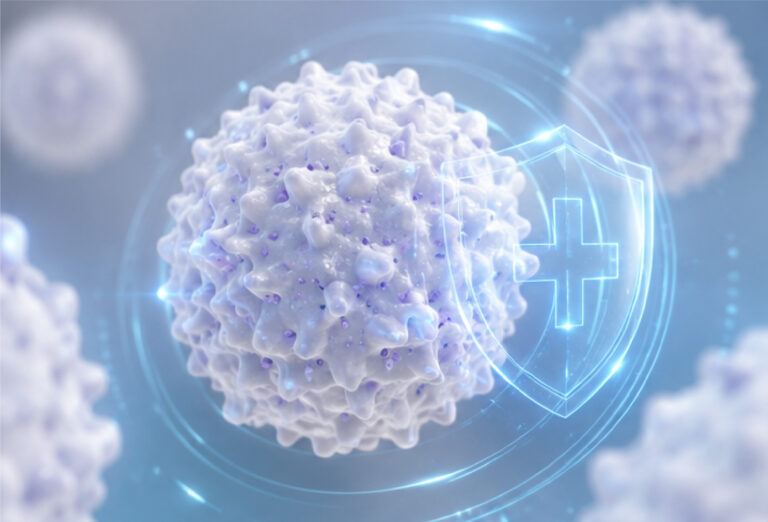
When Do NK Cells Attack?
One of the unique abilities of NK cells is their remarkable precision in determining whether a target cell should be destroyed. This decision depends on the balance between two major signaling systems located on the cell surface.
The first group consists of activating receptors such as NKG2D, NKp30, NKp46, and CD16. These function like an “accelerator,” detecting abnormal stress signals such as MICA/B and ULBPs, which are commonly expressed on cancer cells.
The second group consists of inhibitory receptors such as KIRs, CD94/NKG2A, and PD-1. These act as “brakes,” checking whether a cell is healthy by recognizing normal MHC class I signals.
Whenever the “accelerator” signals outweigh the “brakes,” NK cells immediately initiate their attack. Their major weapons include Perforin and Granzyme B, which induce target cell death, as well as FasL and TRAIL signaling pathways that trigger self-destruction within abnormal cells. NK cells also cooperate with antibodies through CD16-mediated antibody-dependent cellular cytotoxicity (ADCC), enhancing the precision of their attack.
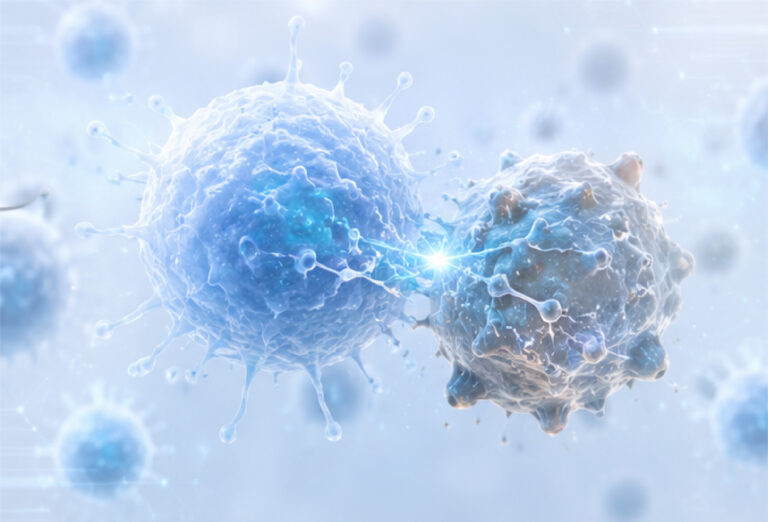
The Hidden Problem: NK Cells Are Often “Suppressed” Without Us Realizing It
Although NK cells possess powerful capabilities, they frequently fail to function at full capacity in real life because they are continuously suppressed by surrounding factors — especially those that increase inhibitory signaling and contribute to immune exhaustion.
One major contributor is chronic inflammation, often associated with high-sugar diets, processed foods, and obesity. This inflammatory state increases cytokines such as IL-6 and TNF-α while also activating inhibitory receptors including PD-1 and TIGIT, causing NK cells to become less responsive and slower to act.
Similarly, high blood sugar levels and insulin resistance can reduce NKG2D activity and decrease the production of Perforin and Granzyme, directly impairing the ability of NK cells to eliminate abnormal cells.
Environmental factors also play an important role. Exposure to PM2.5 pollution, heavy metals, pesticides, and microplastics can increase oxidative stress and disrupt mitochondrial function — the primary energy source of NK cells — ultimately weakening their performance.

Even basic factors such as sleep significantly affect NK cell activity. Sleep deprivation lowers melatonin levels while increasing cortisol, both of which are associated with reduced NK cell function.
Chronic stress further activates the hypothalamic-pituitary-adrenal (HPA) axis, leading to sustained cortisol elevation that suppresses immune activity and enhances inhibitory signaling.
Lifestyle habits such as smoking, excessive alcohol consumption, and physical inactivity also reduce the effectiveness of NK cells in identifying and eliminating abnormal cells.
When these factors occur together, they create a vicious cycle. Poor sleep increases stress, stress elevates blood sugar, unhealthy eating promotes inflammation, and inflammation increases PD-1 expression, which further suppresses NK cell activity.

Restoring NK Cell Health Requires a Multi-Targeted Approach
Modern approaches to supporting NK cell function no longer focus on searching for a single “miracle compound.” Instead, they emphasize the concept of multi-axis modulation — restoring multiple biological systems simultaneously.
Pillar 1: Medicinal Mushrooms
Medicinal mushrooms such as Reishi, Turkey Tail, and Shiitake contain beta-glucans that stimulate immune activity through receptors such as Dectin-1 and CR3. This promotes the release of cytokines including IL-12 and IL-15, which indirectly help activate NK cells.
Pillar 2: Phytonutrients
Certain phytonutrients help expose abnormal cells more clearly to NK cells by enhancing cellular stress signaling.
Pillar 3: Repurposed Drugs and Probiotic Therapy
Several repurposed medications and microbiome-focused approaches are being investigated for their ability to support NK cell activity and enhance the elimination of abnormal or cancerous cells.
Pillar 4: Immune Checkpoint Blockade
In modern medicine, immune checkpoint blockade targets inhibitory receptors such as PD-1 or NKG2A, effectively “unlocking” NK cells and restoring their full functional capacity.
Pillar 5: Lifestyle Restoration
Perhaps the most important pillar is lifestyle modification itself. Restoring gut microbiome balance, addressing hidden infections, minimizing exposure to environmental toxins, exercising regularly, supporting detoxification pathways, maintaining healthy circadian sleep patterns, and managing emotional stress all help remove the inhibitory signals suppressing NK cell function.
Restoring NK Cell Function Is About More Than Stimulation
Improving NK cell health should not focus solely on stimulation. It also requires creating an internal environment that supports proper immune function, enabling NK cells to effectively identify and eliminate harmful targets while simultaneously removing the inhibitory signals caused by unhealthy lifestyle patterns.
Note: This content is intended for educational purposes to help explain immune mechanisms as an adjunctive approach. It is not a substitute for standard medical treatment and should be followed under the guidance of a qualified healthcare professional.