
Medical Article

Home / Medical Article / ECP Restoring Heart Function and Revitalizing Cardiac Health

ECP Restoring Heart Function and Revitalizing Cardiac Health

ECP Restoring Heart Function and Revitalizing Cardiac Health

Dr.Sitt Tienthiti : Integrative and Regenerative medicine
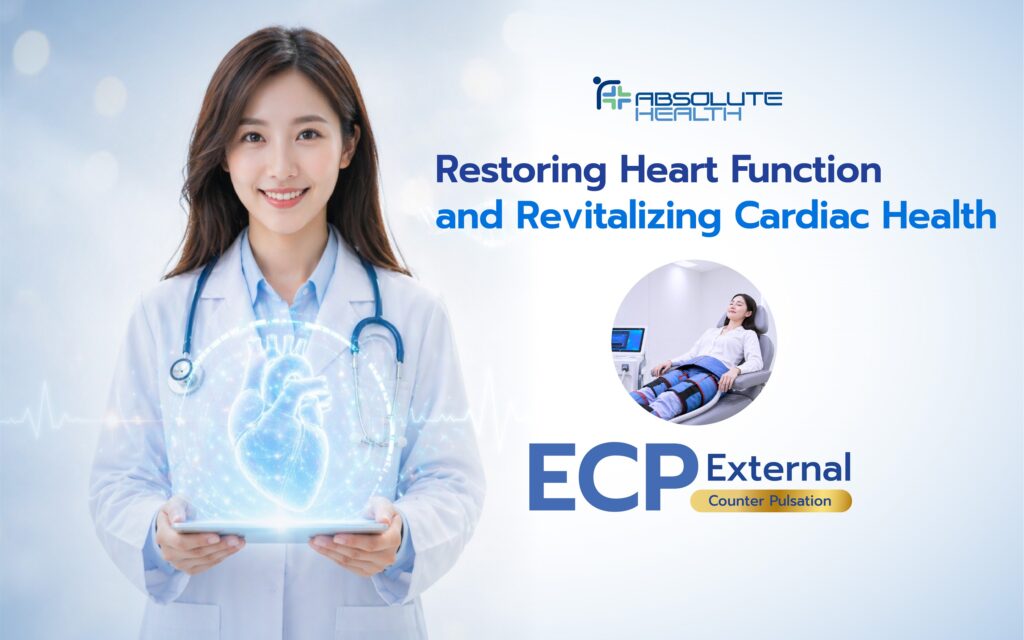
Banner ECP หัวใจ AH 01

External Counterpulsation (ECP) is a non-invasive cardiac therapy designed to help restore and improve heart function without surgery. The treatment uses inflatable cuffs wrapped around the legs that rhythmically inflate and deflate in synchronization with the heartbeat. This process helps increase blood flow back to the heart while simultaneously reducing the heart’s workload.

ECP heart (1)

Because of these effects, ECP has been widely used in patients with coronary artery disease, particularly those who continue to experience chest discomfort despite standard medical treatment or those who are not suitable candidates for additional invasive procedures.

Medical evidence has shown that ECP can significantly improve patient symptoms, including:

  • Reduced frequency and severity of angina (chest pain)
  • Increased exercise tolerance
  • Improved overall quality of life

In many cases, ECP enables patients to “feel better and live better” in a meaningful and measurable way.

ECP heart (2)

Beyond symptom relief, ECP also exerts beneficial effects on the vascular system. The therapy increases shear stress within blood vessels — a physiological force generated by blood flow — which helps stimulate healthier vascular function. This effect resembles the beneficial circulatory changes that occur during physical exercise.

This mechanism promotes the production of nitric oxide, a substance that helps blood vessels dilate more effectively. It may also contribute to reducing certain inflammatory processes within the body. In addition, ECP can improve microcirculation, enhancing blood flow through small blood vessels — much like improving “traffic flow” within the vascular network — allowing oxygen and nutrients to reach organs more efficiently.

ECP heart (3)

At present, there is still no definitive evidence confirming that ECP can directly:

  • Reduce structural plaque buildup in arteries
  • Prevent heart attacks
  • Lower mortality rates

However, ECP continues to gain attention as an adjunctive therapy that supports vascular and cardiac restoration, particularly within the broader concept of cardiac rehabilitation.

Observational studies have reported promising findings, suggesting that patients receiving ECP may experience fewer cardiovascular complications over time. As a result, ECP has become increasingly recognized as a complementary therapy that helps improve cardiovascular balance and enhances patient quality of life.
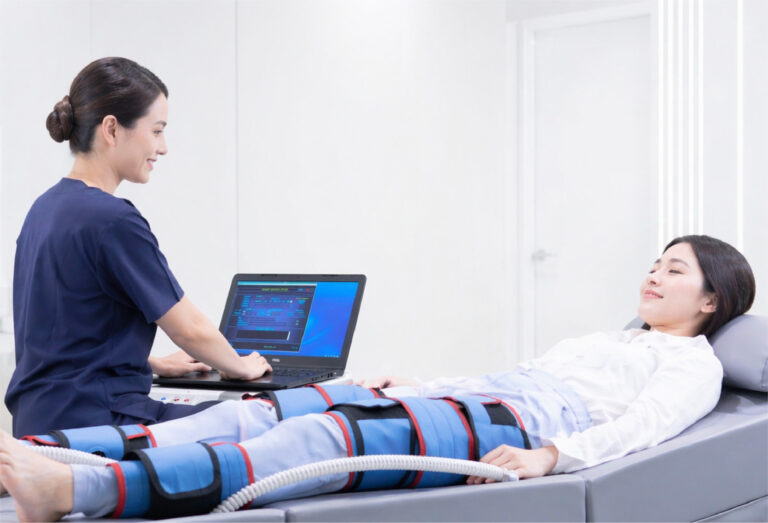
ECP heart (4)

Nevertheless, addressing the root causes of cardiovascular disease still requires:

  • Lifestyle modification
  • Risk factor control
  • Standard evidence-based medical treatment

ECP should therefore be viewed as an additional therapeutic tool that plays an important supportive role in modern cardiac rehabilitation and heart health restoration.

  1. Arora RR, Chou TM, Jain D, Fleishman B, Crawford L, McKiernan T, et al. The Multicenter Study of Enhanced External Counterpulsation (MUST-EECP): effect of EECP on exercise-induced myocardial ischemia and anginal episodes. J Am Coll Cardiol. 1999;33(7):1833–40.
  2. Soran O, Kennard ED, Kfoury AG, Kelsey SF; IEPR Investigators. Two-year clinical outcomes after enhanced external counterpulsation (EECP) therapy in patients with refractory angina pectoris. Am J Cardiol. 2006;97(1):17–20.
  3. McKenna C, McDaid C, Suekarran S, Hawkins N, Rice S, Palmer S, et al. Enhanced external counterpulsation for the treatment of stable angina and heart failure: a systematic review and economic analysis. Health Technol Assess. 2009;13(24):1–90.
  4. Gloekler S, Meier P, de Marchi SF, Rutz T, Traupe T, Rimoldi SF, et al. Coronary collateral growth by external counterpulsation: a randomised controlled trial. Heart. 2010;96(3):202–7.
  5. Buschmann EE, Utz W, Pagonas N, Schulz-Menger J, Busjahn A, Monti J, et al. Improvement of fractional flow reserve and collateral flow by treatment with external counterpulsation (Art.Net.-2 Trial). Eur J Clin Invest. 2009;39(10):866–75.
  6. Bondesson SM, Pettersson T, Erdling A, Eriksson P. Enhanced external counterpulsation in patients with refractory angina pectoris: a systematic review. Clin Cardiol. 2008;31(2):84–9.
  7. Fihn SD, Blankenship JC, Alexander KP, Bittl JA, Byrne JG, Fletcher BJ, et al. 2014 ACC/AHA/AATS/PCNA/SCAI/STS focused update of the guideline for the diagnosis and management of patients with stable ischemic heart disease. J Am Coll Cardiol. 2014;64(18):1929–49.
  8. Mannheimer C, Camici P, Chester MR, Collins A, DeJongste M, Eliasson T, et al. The problem of chronic refractory angina: report from the ESC Joint Study Group. Eur Heart J. 2002;23(5):355–70.
  9. Knuuti J, Wijns W, Saraste A, Capodanno D, Barbato E, Funck-Brentano C, et al. 2019 ESC Guidelines for the diagnosis and management of chronic coronary syndromes. Eur Heart J. 2020;41(3):407–77.
  10. Bonetti PO, Gadasalli SN, Lerman A, Barsness GW. Successful treatment of symptomatic coronary endothelial dysfunction with enhanced external counterpulsation. Mayo Clin Proc. 2004;79(5):690–2.
  11. Soran O, Fleishman B, Demarco T, et al. Enhanced external counterpulsation in patients with heart failure: a multicenter feasibility study. Congest Heart Fail. 2002;8(4):204–8.
  12. Braith RW, Conti CR, Nichols WW, et al. Enhanced external counterpulsation improves peripheral artery flow-mediated dilation. Circulation. 2002;106(2):234–9.
  13. Casey DP, Beck DT, Nichols WW, et al. Effects of EECP on endothelial function and arterial stiffness. Am J Cardiol. 2011;107(3):462–7.
  14. Xiao Z, Zhang Z, Hu J, Wang W, Yang T, Tan W, et al. Cardiac rehabilitation based on enhanced external counterpulsation in patients with acute coronary syndrome. Front Cardiovasc Med. 2026 Feb 27;13:1677312.