
Medical Article

Home / Medical Article / Chronic Pain: When Pain Is Not Just an Injury, but a System Out of Balance

Chronic Pain: When Pain Is Not Just an Injury, but a System Out of Balance

Chronic Pain: When Pain Is Not Just an Injury, but a System Out of Balance

Dr.Sitt Tienthiti : Integrative and Regenerative medicine
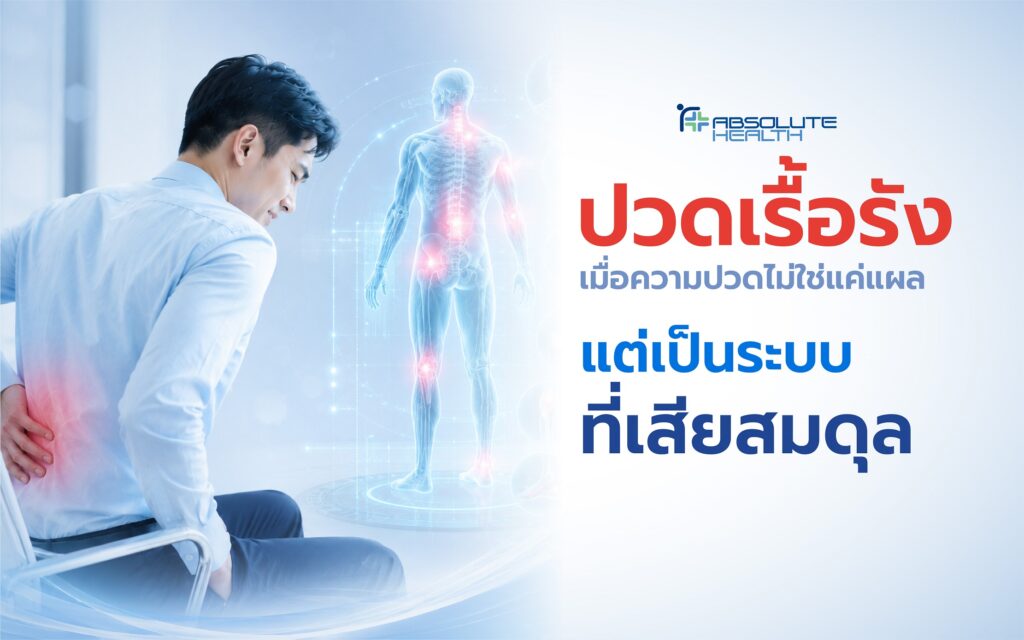
Banner ปวดเรื้อรัง AH 01

Many people believe that pain is caused only by “injury” or “inflammation.” In reality, for individuals with chronic pain — pain lasting longer than three months — the body may no longer have severe ongoing tissue damage. Instead, what often occurs is a dysfunction of the body’s “pain processing system.”

In other words, pain is not determined solely by what happens in the body, but also by how the brain interprets those signals.

Pain can arise from several different sources and is generally classified into three main categories:

  1. Inflammatory or tissue injury pain
    Such as osteoarthritis or muscle inflammation
  2. Neuropathic pain
    Such as peripheral neuropathy or nerve compression from a herniated disc
  3. Centralized or abnormal pain processing
    Such as fibromyalgia or chronic pain syndromes affecting muscles, tendons, and soft tissues throughout the body — commonly involving the head, neck, shoulders, and back

However, in real-life clinical situations, patients rarely experience only one type of pain. Most cases involve a “combination” of factors, such as muscular problems together with an overactive nervous system and accumulated stress.

Chronic Pain (1)

Why Does Chronic Pain Persist?

In the early stages, pain may begin with injury or inflammation. But when pain continues for a prolonged period, the nervous system starts to “learn” the pain.

As a result:

  • The body becomes increasingly sensitive to pain
  • Even minor stimuli may trigger pain
  • Sometimes pain occurs without a clear physical cause

This creates a continuous “pain cycle.”

Eventually, the brain itself becomes the center of pain processing. In conditions such as fibromyalgia and chronic pain syndromes, pain is no longer limited to a single organ or body part. Instead, patients may experience widespread body pain accompanied by fatigue, insomnia, and mental exhaustion — demonstrating that chronic pain is a disorder of the entire system, not just a localized problem.
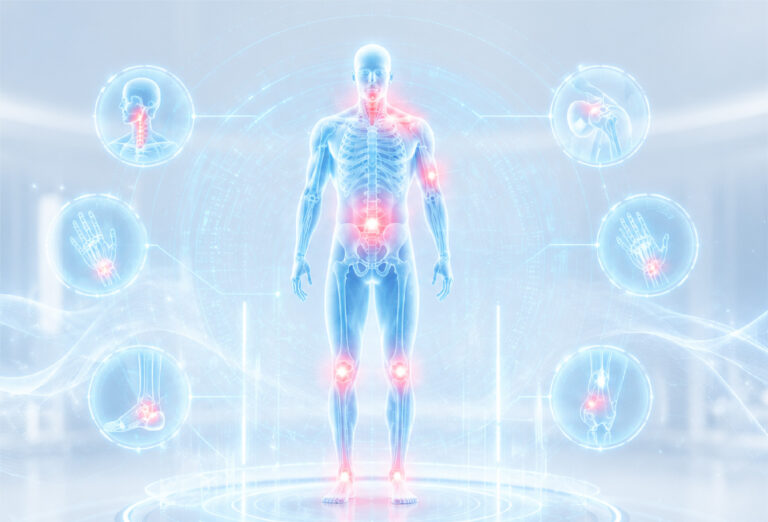
Chronic Pain (2)

Why Do Physicians Measure Pain by Asking Patients?

Pain is a subjective experience, not a laboratory number.

Although many medical tests exist, there is still no definitive test that can accurately measure “how much pain” a person feels. Therefore, the patient’s own experience remains the most important source of information in pain assessment.

Oxidative Stress: Another Key Factor in Chronic Pain

Beyond nervous system dysfunction, another major contributor to chronic pain is:

  • Cellular oxidative stress
  • Chronic inflammation

When these conditions occur:

  • Cells function less efficiently
  • The body produces less energy
  • The nervous system becomes more sensitive

All of these factors contribute to pain becoming “trapped” within the system.

Chronic Pain (3)

The Body’s Protective System: Nrf2

The body contains an important protective pathway called Nrf2, which helps defend cells against stress.

This system helps:

  • Reduce inflammation
  • Minimize oxidative damage
  • Support cellular recovery and repair

When the Nrf2 system functions properly, the body becomes more resilient to stress, and the chronic pain cycle may gradually calm down.

Chronic Pain (4)

Treating Chronic Pain Requires More Than Painkillers

In the past, treatment often focused only on “taking medication to stop pain.” Today, it is increasingly recognized that this approach alone is insufficient.

Effective chronic pain management requires a multidimensional approach involving several areas simultaneously.

  1. Foundational Care

The most important components include:

  • Understanding the condition
  • Appropriate physical activity and exercise
  • Sleep restoration
  • Stress reduction
  1. Medications

Treatment may include:

  • Anti-inflammatory medications
  • Medications that regulate nervous system activity
  • Specialized medications prescribed according to clinical judgment
  1. “Resetting” the Pain System

For patients with severe chronic pain, additional approaches may include:

  • Low-dose medications aimed at reducing neuroinflammation
  • Brain stimulation therapies such as Transcranial Magnetic Stimulation (TMS)
  • Targeted anesthetic injections to reduce localized pain signaling
  1. Integrative Medicine Approaches

Some supportive therapies may include:

  • Selected nutritional supplements
  • Hyperbaric Oxygen Therapy (HBOT)
  • Ozone Therapy

These approaches aim to help “rebalance internal systems,” including support for the Nrf2 pathway.

Chronic Pain Is a Whole-System Disorder

Ultimately, chronic pain is not simply about injury or damaged nerves. It involves the interaction of:

  • The brain
  • The body
  • Cellular function

Because treating chronic pain is not only about reducing pain symptoms, but about restoring balance to the body’s entire pain-processing system.

  1. Treede RD, Rief W, Barke A, Aziz Q, Bennett MI, Benoliel R, et al. Chronic pain as a symptom or a disease: the IASP classification of chronic pain for the International Classification of Diseases (ICD-11). Pain. 2019;160(1):19–27.
  2. Nicholas M, Vlaeyen JWS, Rief W, Barke A, Aziz Q, Benoliel R, et al. The IASP classification of chronic pain for ICD-11. Pain. 2019;160(1):28–37.
  3. International Association for the Study of Pain. IASP terminology and definition of pain. Pain. 2020;161(9):1976–1982.
  4. Woolf CJ. Central sensitization: implications for the diagnosis and treatment of pain. Pain. 2011;152(3 Suppl):S2–S15.
  5. Nijs J, Torres-Cueco R, van Wilgen CP, Girbés EL, Struyf F, Roussel N, et al. Applying modern pain neuroscience in clinical practice. Man Ther. 2014;19(5):397–404.
  6. Ji RR, Nackley A, Huh Y, Terrando N, Maixner W. Neuroinflammation and central sensitization in chronic pain. Nat Rev Neurosci. 2018;19(6):325–337.
  7. Häuser W, Ablin J, Fitzcharles MA, Littlejohn G, Luciano JV, Usui C, et al. Fibromyalgia. Nat Rev Dis Primers. 2015;1:15022.
  8. Clauw DJ. Fibromyalgia: a clinical review. JAMA. 2014;311(15):1547–1555.
  9. Kosek E, Cohen M, Baron R, Gebhart GF, Mico JA, Rice ASC, et al. Do we need a third mechanistic descriptor for chronic pain? Pain. 2016;157(7):1382–1386.
  10. National Institute for Health and Care Excellence (NICE). Chronic pain (primary and secondary) in over 16s: assessment and management (NG193). London: NICE; 2021.
  11. Centers for Disease Control and Prevention (CDC). CDC clinical practice guideline for prescribing opioids for pain—United States, 2022. MMWR Recomm Rep. 2022;71(3):1–95.
  12. Qaseem A, Wilt TJ, McLean RM, Forciea MA. Noninvasive treatments for acute, subacute, and chronic low back pain. Ann Intern Med. 2017;166(7):514–530.
  13. Tonelli C, Chio IIC, Tuveson DA. Transcriptional regulation by Nrf2. Antioxid Redox Signal. 2018;29(17):1727–1745.
  14. Ma Q. Role of Nrf2 in oxidative stress and toxicity. Annu Rev Pharmacol Toxicol. 2013;53:401–426.
  15. Bellezza I, Giambanco I, Minelli A, Donato R. Nrf2–Keap1 signaling in oxidative stress. Biochim Biophys Acta Mol Cell Res. 2018;1865(5):721–733.
  16. Cuadrado A, Pajares M, Benito C, et al. NRF2 and neurodegenerative diseases. Trends Pharmacol Sci. 2018;39(7):653–666.
  17. Li X, Wang H, Gao Y, et al. Nrf2 activation attenuates inflammatory pain by inhibiting NF-κB signaling. Mol Pain. 2018;14:1744806918769139.
  18. Zhang J, Wang X, Vikash V, et al. ROS and ROS-mediated cellular signaling. Oxid Med Cell Longev. 2016;2016:4350965.
  19. Bocci V. Ozone: A new medical drug. Dordrecht: Springer; 2011.
  20. Re L, Martínez-Sánchez G, Bordicchia M, et al. Is ozone pre-conditioning effect linked to Nrf2/EpRE activation pathway? Free Radic Res. 2014;48(7):773–780.
  21. Sagai M, Bocci V. Mechanisms of action involved in ozone therapy. Med Gas Res. 2011;1:29.
  22. Thom SR. Hyperbaric oxygen: its mechanisms and efficacy. Plast Reconstr Surg. 2011;127 Suppl 1:131S–141S.
  23. Godman CA, Chheda KP, Hightower LE, Perdrizet G, Shin DG, Giardina C. Hyperbaric oxygen induces a cytoprotective and angiogenic response via Nrf2 activation. Free Radic Biol Med. 2010;49(11):1721–1732.
  24. Hadanny A, Efrati S. The hyperoxic-hypoxic paradox. Biomolecules. 2020;10(6):958.
  25. Efrati S, Golan H, Bechor Y, et al. Hyperbaric oxygen therapy can diminish fibromyalgia syndrome—prospective clinical trial. PLoS One. 2015;10(5):e0127012.
  26. Younger J, Noor N, McCue R, Mackey S. Low-dose naltrexone for fibromyalgia: a randomized controlled trial. Arthritis Rheum. 2013;65(2):529–538.
  27. Younger J, Parkitny L, McLain D. The use of low-dose naltrexone for chronic pain. Clin Rheumatol. 2014;33(4):451–459.
  28. Raknes G, Småbrekke L. Low-dose naltrexone in chronic pain and inflammatory conditions. Pharmacotherapy. 2017;37(3):e11–e22.
  29. Toljan K, Vrooman B. Low-dose naltrexone (LDN)—review of therapeutic utilization. Med Sci (Basel). 2018;6(4):82.
  30. Patten DK, Schultz BG, Berlau DJ. Low-dose naltrexone in chronic pain and inflammatory disease. J Clin Pharm Ther. 2018;43(4):451–459.
  31. Paladini A, Fusco M, Cenacchi T, Schievano C, Piroli A, Varrassi G. Palmitoylethanolamide in chronic pain. Pain Physician. 2016;19(2):11–24.
  32. Keppel Hesselink JM, Kopsky DJ. Palmitoylethanolamide: a natural anti-inflammatory compound. J Pain Res. 2015;8:419–426.
  33. Di Pierro F, Bressan A, Rapacioli G, et al. Role of PEA in neuropathic pain. Clin Drug Investig. 2013;33(6):457–463.
  34. Henrotin Y, Clutterbuck AL, Allaway D, et al. Biological actions of curcumin. J Nutr Biochem. 2010;21(12):1133–1140.
  35. Calder PC. Omega-3 fatty acids and inflammatory processes. Nutrients. 2010;2(3):355–374.
  36. Cordero MD, Alcocer-Gómez E, Culic O, et al. Coenzyme Q10 in fibromyalgia. Nutrition. 2013;29(11–12):1200–1203.
  37. Bjørklund G, Dadar M, Aaseth J. Role of magnesium in pain and neurological disorders. Magnes Res. 2017;30(4):233–245.
  38. Lefaucheur JP, Aleman A, Baeken C, et al. Evidence-based guidelines on rTMS. Clin Neurophysiol. 2020;131(2):474–528.
  39. Mhalla A, Baudic S, Ciampi de Andrade D, et al. Long-term analgesic effects of rTMS in fibromyalgia. Pain. 2011;152(7):1478–1485.
  40. Short EB, Borckardt JJ, Anderson BS, et al. rTMS reduces pain in fibromyalgia. J Pain. 2011;12(1):94–102.
  41. O’Connell NE, Wand BM, Marston L, Spencer S, DeSouza LH. Non-invasive brain stimulation for chronic pain. Cochrane Database Syst Rev. 2018;4:CD008208.
  42. Beaulieu LD, Schneider C. Repetitive peripheral magnetic stimulation in chronic pain. Clin Neurophysiol. 2015;126(7):1340–1347.
  43. Strauch B, Herman C, Dabb R, Ignarro LJ, Pilla AA. Pulsed electromagnetic field therapy. Plast Reconstr Surg. 2009;123(1):34e–40e.
  44. Markov MS. Pulsed electromagnetic field therapy: history and future. Electromagn Biol Med. 2007;26(1):1–23.
  45. Smania N, Corato E, Fiaschi A, et al. Repetitive magnetic stimulation for neuropathic pain. Neurology. 2005;65(2):176–178.