
Home / Medical Article / Chronic Pain: When Pain Is Not Just an Injury, but a System Out of Balance
Dr.Sitt Tienthiti : Integrative and Regenerative medicine
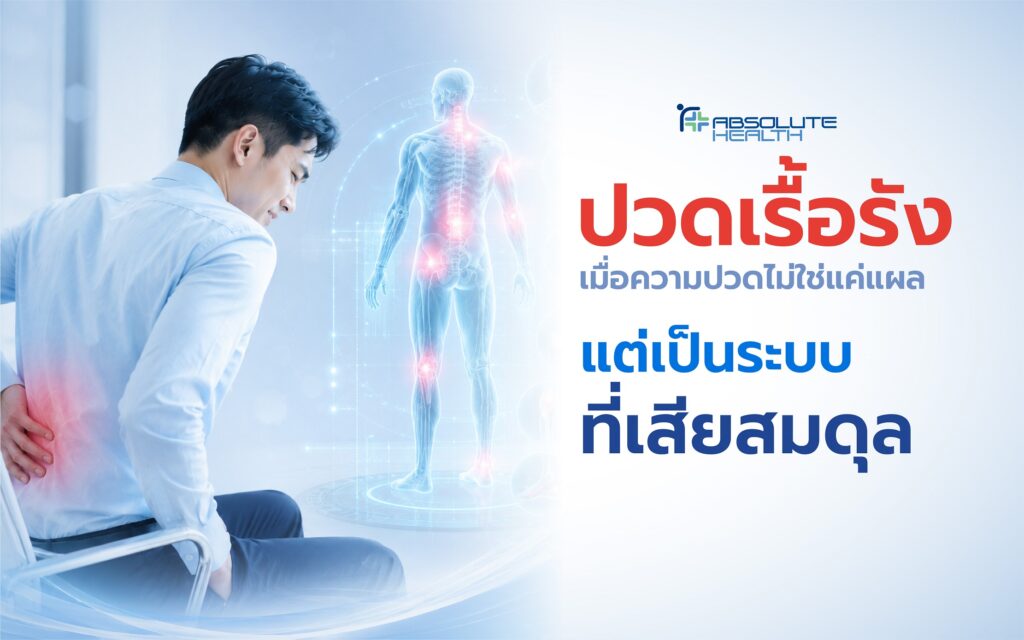
Many people believe that pain is caused only by “injury” or “inflammation.” In reality, for individuals with chronic pain — pain lasting longer than three months — the body may no longer have severe ongoing tissue damage. Instead, what often occurs is a dysfunction of the body’s “pain processing system.”
In other words, pain is not determined solely by what happens in the body, but also by how the brain interprets those signals.
Pain can arise from several different sources and is generally classified into three main categories:
However, in real-life clinical situations, patients rarely experience only one type of pain. Most cases involve a “combination” of factors, such as muscular problems together with an overactive nervous system and accumulated stress.

Why Does Chronic Pain Persist?
In the early stages, pain may begin with injury or inflammation. But when pain continues for a prolonged period, the nervous system starts to “learn” the pain.
As a result:
This creates a continuous “pain cycle.”
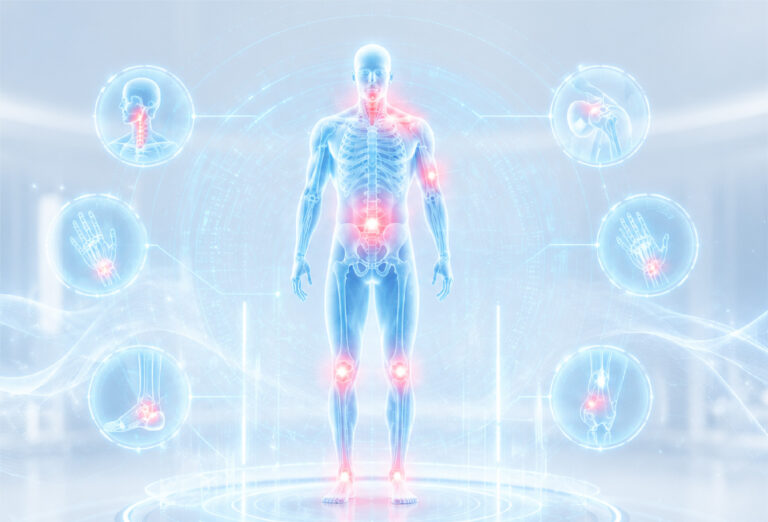
Eventually, the brain itself becomes the center of pain processing. In conditions such as fibromyalgia and chronic pain syndromes, pain is no longer limited to a single organ or body part. Instead, patients may experience widespread body pain accompanied by fatigue, insomnia, and mental exhaustion — demonstrating that chronic pain is a disorder of the entire system, not just a localized problem.
Why Do Physicians Measure Pain by Asking Patients?
Pain is a subjective experience, not a laboratory number.
Although many medical tests exist, there is still no definitive test that can accurately measure “how much pain” a person feels. Therefore, the patient’s own experience remains the most important source of information in pain assessment.
Oxidative Stress: Another Key Factor in Chronic Pain
Beyond nervous system dysfunction, another major contributor to chronic pain is:
When these conditions occur:
All of these factors contribute to pain becoming “trapped” within the system.

The Body’s Protective System: Nrf2
The body contains an important protective pathway called Nrf2, which helps defend cells against stress.
This system helps:
When the Nrf2 system functions properly, the body becomes more resilient to stress, and the chronic pain cycle may gradually calm down.

Treating Chronic Pain Requires More Than Painkillers
In the past, treatment often focused only on “taking medication to stop pain.” Today, it is increasingly recognized that this approach alone is insufficient.
Effective chronic pain management requires a multidimensional approach involving several areas simultaneously.
The most important components include:
Treatment may include:
For patients with severe chronic pain, additional approaches may include:
Some supportive therapies may include:
These approaches aim to help “rebalance internal systems,” including support for the Nrf2 pathway.
Chronic Pain Is a Whole-System Disorder
Ultimately, chronic pain is not simply about injury or damaged nerves. It involves the interaction of:
Because treating chronic pain is not only about reducing pain symptoms, but about restoring balance to the body’s entire pain-processing system.